Pope Leo XIV: The Man Chosen to Guide the Church Through a New Era
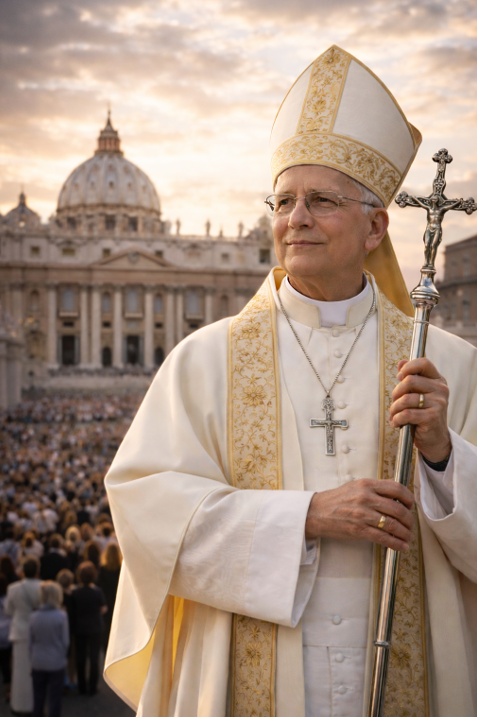
The world waited with bated breath after the passing of Pope Francis on April 21, 2025. Many Catholics and observers of global faith looked toward Rome with hope and worry. They thought about change. They thought about continuity. They wondered who would take the ancient seat once held by a pope so loved for his humility and compassion.
Then, on May 8, 2025, the moment came. White smoke rose from the chimney of the Sistine Chapel. A new pope had been chosen. The crowd in St. Peter’s Square erupted in joy. And the name was announced in Latin: Habemus papam—We have a pope. The 267th Bishop of Rome was revealed to the world. His name was Pope Leo XIV.
Pope Leo is a figure that many did not expect. He is the first American-born pope in history. He is also the second leader of the Church from the Americas, following Pope Francis.
But Pope Leo brings his own story, background, and vision.

Who Is Pope Leo XIV?
Pope Leo XIV was born Robert Francis Prevost on September 14, 1955, in Chicago, Illinois. He grew up in a family of mixed heritage. His father had French and Italian roots. His mother was of Spanish descent.
He studied mathematics at Villanova University before entering religious life. He joined the Order of Saint Augustine, also known as the Augustinians. He felt called to both deep faith and active service. He was ordained a priest in 1982. Later, he earned advanced degrees in canon law and theology.
For more than a decade, he lived and worked as a missionary in Peru. In poor communities, he taught, preached, and served the faithful. He became known as a humble servant and a wise teacher.
In 2015, Pope Francis appointed him Bishop of Chiclayo, Peru. He later came back to Rome to serve as Prefect of the Dicastery for Bishops (a powerful Vatican office). In 2023, Francis made him a cardinal. And in May 2025, his peers in the College of Cardinals elected him pope.
When he accepted his election, he chose the name Leo XIV. He did so in honor of Pope Leo XIII, an earlier pope known for shaping modern Catholic social teaching. By choosing this name, he signaled a desire to build on that legacy and speak to the needs of the modern world.
An Unprecedented Choice at a Critical Era
Pope Leo XIV holds a unique place in history. Never before has a pope been born in the United States. That alone makes his election noteworthy. But his life and ministry also cross cultures, languages, and regions.
He worked for many years in Latin America. He speaks Spanish. He understands the challenges faced by people in both the Global North and the Global South. This gives him a rare perspective on the Church’s global mission.
Leaders around the world reacted with great interest to his election. Heads of state, diplomats, and religious figures offered congratulations. Many hoped that the new pope would bring unity and a renewed voice for peace on the global stage.
Many Catholics see his American roots and long service abroad as a bridge between diverse cultures. They see a pope who can speak to people from every continent and every walk of life.
A Voice of Calm in a Restless World
In his first public address from the balcony of St. Peter’s Basilica, Pope Leo spoke with calm authority. He invoked peace and unity. He quoted Saint Augustine, the spiritual father of his religious order. He thanked the faithful and expressed deep humility in his new role.
From his earliest speeches, he has stressed that the Church must be a place of communion. That means a Church that listens. A Church that stands with the poor. A Church that seeks peace. These themes echo throughout his early words as pope and in his first book, Let There Be Peace! Words to the Church and to the World, published in August 2025.
In that collection, he writes about peace that comes not from power but from humility. He reminds readers that peace must begin in each person’s heart. He calls on people to treat others with dignity and respect.
He has also released official Church documents that reflect his priorities. In October 2025, he released an apostolic exhortation titled Dilexi te (“I have loved you”), which focuses on love for the poor and the Church’s commitment to those most in need.
Leo XIV: A New Leader Under the Shadow of a Giant.
Pope Francis set a tone of mercy, simplicity, and closeness to the marginalized. He lived in a modest residence. He washed the feet of prisoners and refugees. He spoke openly about social justice and care for the vulnerable.
Pope Leo carries these same values forward. He honors that legacy. He has spoken often about peace and human dignity. He has made strong statements about caring for those who suffer.
But there are differences too. Pope Leo is seen as a more moderate administrator with a structured approach to Church governance. He brings strong experience in governance from leading the Augustinian order and working in major Vatican offices.
His ties to the United States, Latin America, and Rome give him a broad perspective on global issues. He has addressed modern concerns like climate change, migration, and human rights, showing that the Church must speak to both eternal truths and urgent challenges.
Unlike Francis, who chose a name that pointed exclusively to a saint rather than a predecessor, Leo chose a historic papal name rooted in Catholic social tradition. This signals both respect for tradition and a focus on justice and peace.
The Hopes Placed Upon His Shoulders
The world faces conflict, division, inequality, and fear. Many global leaders have said they look to Pope Leo for moral clarity. They want a voice for peace. They want an advocate for the vulnerable. They want a leader who can bridge divides.
Catholics hope he will continue the synodal path begun under Francis. That path encourages listening and dialogue within the Church. It asks bishops, priests, and laypeople to work together. Many see Pope Leo as well-suited to guide this process.
Some issues remain unclear. For example, in the tensest conflicts around the world, including wars and displacement, Pope Leo has not yet spoken as boldly as Francis has in certain individual situations. But he has expressed deep concern about global violence and urged people everywhere to work for peace.
World watchers also expect him to act on issues such as migration, the environment, social justice, and the dignity of work. Many see him carrying forward the Church’s role as a moral voice in public life.
A Year That Could Shape His Legacy
Pope Leo XIV is still in the early days of his papacy, but the tone of his leadership is already taking shape. He moves with care. He listens closely. He speaks with intention. Nothing feels rushed. Every decision reflects the weight of the office he now holds.
The months ahead will reveal much more. The Church faces deep internal questions. The world faces conflict and uncertainty. Many are watching Rome, hoping for steady guidance and moral clarity. Catholics want direction. Global leaders want a voice for peace. Ordinary people want reassurance that faith still speaks to real struggles.
As his first year draws to a close, early signs suggest a papacy grounded in calm leadership and thoughtful resolve. His steady presence has brought a sense of balance during a restless time. If this momentum continues, his first year may end on a positive note, marked by renewed trust and quiet confidence in the path ahead.
Meta Title
Pope Leo XIV: The Man Chosen to Guide the Church Through a New Era
Meta Description
Learn who Pope Leo XIV is, the first American pope, his vision for the Catholic Church, and what the world expects from his leadership around the globe.
0 Comments
- No comments yet. Be the first to share your thoughts.
Join the Conversation
Have thoughts on this article? Share your perspective on Instagram or X (Twitter).