The Epstein Files: A Story of Influence, Exposure, and the People Forgotten
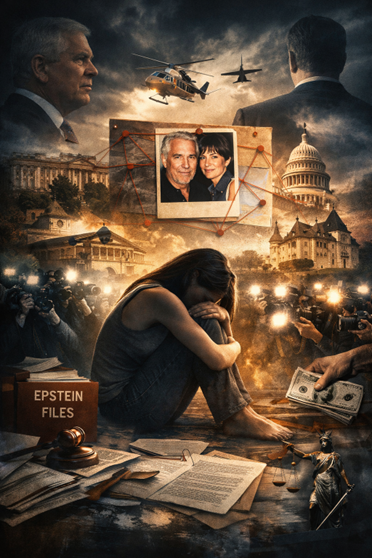
I remember the first time I heard the name Jeffrey Epstein. It was years ago, and the story sounded unreal. A wealthy man with a private island. A jet people later called the “Lolita Express.” Rumors about powerful men and secret flights. At first, it felt like a tabloid tale. But the more I learned, the deeper and darker it became.
Epstein was a rich person who was accused and later proven to be a convicted sex offender. His crimes spanned decades. He built a network that hurt countless young girls. Girls who were manipulated, abused, and left to carry pain long after the headlines faded. His partner, Ghislaine Maxwell, was convicted and sentenced for helping him sexually traffic young women. Epstein died in 2019 in a New York jail cell while awaiting trial on federal sex trafficking charges.
Years later, after his death, the United States Department of Justice began releasing what we now call the Epstein files. These are millions of pages of documents, emails, photos, and records tied to Epstein and the people in his orbit. In January 2026, a huge batch of these files hit the public domain. More than three million pages, thousands of images, and videos were made available for researchers, journalists, lawmakers, and the public to examine.
Today, these files continue to shape how Americans and the wider world think about power, privilege, and justice.

The Investigation That Nearly Stopped Him
The first alarm sounded in Palm Beach, Florida, in 2005. A couple contacted police after their 14-year-old daughter said a wealthy man had paid her to give him a massage at his mansion. That man was Jeffrey Epstein, a financier who moved easily among billionaires, politicians, and royalty.
What investigators uncovered was far darker than a strange massage request.
Teenage girls described a pattern. They were invited to Epstein’s home, paid hundreds of dollars, and pressured into sexual acts. Many said they were asked to recruit other girls and were paid if they brought friends. Several victims were as young as fourteen.
Ghislaine Maxwell, Epstein’s close associate, was later convicted for helping recruit and groom many of these girls. Prosecutors said she played a central role in building the system that allowed Epstein to exploit minors.
Detective Joseph Recarey began investigating. What started with one complaint quickly grew. By 2006, police had identified more than 30 potential victims.
Investigators recommended serious felony charges that could have put Epstein in prison for decades.
But the case took a dramatic turn.
In 2008, Epstein reached a controversial non-prosecution agreement with federal prosecutors. Instead of facing federal sex-trafficking charges, he pleaded guilty to two state offenses and received an 18-month sentence in a county jail, serving about 13 months. Even during that time, he was allowed to participate in a work-release program that let him leave jail for up to 12 hours a day.
Afterward, Epstein registered as a sex offender and returned to a life of private jets, luxury homes, and elite connections.
He continued to move in powerful circles that included figures such as former U.S. President Bill Clinton, businessman Donald Trump, and Microsoft co-founder Bill Gates, all of whom have said they committed no wrongdoing in connection with Epstein.
For years, the case faded from national attention.
Then it resurfaced.
In 2018, an investigative series by the Miami Herald exposed new details about the plea deal and revealed that many victims had never been informed about it. Public outrage returned, and federal prosecutors in New York reopened the case.
On July 6, 2019, Epstein was arrested at Teterboro Airport in New Jersey as his private jet landed from Paris. Prosecutors charged him with sex trafficking of minors, accusing him of recruiting girls as young as fourteen between 2002 and 2005. A search of his Manhattan mansion uncovered hundreds of photographs of underage girls and large amounts of cash.
This time the charges carried the possibility of decades in federal prison.
Epstein was denied bail and held at the Metropolitan Correctional Center in New York while awaiting trial.
Then, on August 10, 2019, he was found dead in his cell. The medical examiner ruled the death a suicide by hanging.
Legally, that was the end of the criminal case against him.
But for many people, the story did not feel finished.
I have heard it in conversations again and again. People say the same thing in different ways. After years of accusations, after so many victims speaking out, and after the unusually light punishment he received for so long, the ending felt almost too simple.
A man accused of causing so much harm never faced a full trial. And then suddenly he was gone.
Some accept the official explanation. Others still struggle with it. Not because they want a conspiracy, but because the story ended before many questions were answered.
Epstein may be gone.
But the damage he left behind, and the questions about the powerful world around him, are not.
What the Epstein Files Reveal
The Epstein files are massive. Millions of pages. Emails. Flight logs. Photos. Contact lists. It will take years to study everything inside them. Still, even early reviews show one clear pattern. Epstein moved in elite circles for a long time.
Some names were already public. Others appeared in documents people had never seen before.
One name that has drawn global attention is Andrew Mountbatten-Windsor, formerly known as Prince Andrew of the United Kingdom. Documents in the Epstein files show emails and photos that link him to Epstein long after Epstein’s first conviction in 2008. They include messages where he appeared to accept introductions to young women and even invitations to Buckingham Palace.
These revelations reopened old wounds and sparked new investigations. In February 2026, British police arrested Andrew on suspicion of misconduct in public office related to his ties with Epstein. The charges are not directly about sexual abuse, but about allegedly sharing official information with Epstein when he served as a UK trade envoy. Still, the impact was huge. He had already been stripped of his royal titles and evicted from his residence after years of controversy.
In the U.S., the release of millions of Epstein files has sparked its own reactions. People have learned that many prominent figures appear in the documents in some shape or form.
Donald Trump appears in social photographs and flight logs from the 1990s. He has stated he cut ties with Epstein long before the federal charges and has denied wrongdoing. Bill Gates admitted to meeting Epstein after his conviction and later said it was a serious error in judgment. Stephen Hawking’s name surfaced in records connected to scientific gatherings that Epstein attended.
For many Americans, seeing these names side by side in court filings and records was jarring. It showed how easily Epstein blended into rooms filled with presidents, billionaires, scientists, and royalty. Not all appearances suggest wrongdoing. Yet the proximity itself unsettled people.
The Public Reaction No One Could Ignore
Once the files were released, the story shifted. I watched the reactions unfold in real time. On social media. On news shows. In quiet conversations between friends.
Many Americans wanted full transparency. Polls showed strong support for releasing the documents, with victims’ names protected. People did not want summaries. They wanted to see the evidence for themselves.
At the same time, there was a deep unease. Seeing presidents, billionaires, and public figures appear in social logs and flight records unsettled many people. Not every name implies wrongdoing. That is important. Still, I kept hearing the same question again and again.
What allowed him to move in elite circles long after his record was public?
Political denials followed, and legal statements were issued. Yet for many Americans, the issue feels bigger than legal definitions. It feels like a test of trust. A test of whether influence creates distance from consequences.
The reaction has not been only about the scandal. It has been about fairness. I sense that what people really want is simple. They want the same rules applied to everyone. And they want survivors to know their pain is not secondary to power.
A Scandal That Crossed Oceans
The Epstein files did not stop at American borders. They crossed oceans. And when they did, they shook institutions that once seemed untouchable.
In Britain, attention fixed quickly on Andrew Mountbatten-Windsor, formerly known as Prince Andrew. His ties to Epstein had already sparked outrage in 2019 after a televised interview meant to defend his reputation instead deepened public doubt. When newly released files showed continued communication after Epstein’s 2008 conviction, scrutiny intensified. Titles had already been removed. Public duties were gone. Then came arrest on suspicion of misconduct in public office tied to his relationship with Epstein. For many in the United Kingdom, it was more than a scandal. It felt symbolic. A senior royal standing under investigation forced the country to confront uncomfortable truths about privilege.
Yet the story did not end with royalty.
International figures appeared across contact books and communications. Former UK politician Peter Mandelson faced an investigation after reports of extensive contact with Epstein. In Switzerland, scrutiny reached Ariane de Rothschild, CEO of Edmond de Rothschild, after correspondence surfaced showing contact with Epstein years after his conviction. Across Europe and beyond, diplomats, financiers, and cultural figures were named in social records. Being listed did not equal criminal guilt. Still, the pattern was striking. Epstein’s world was global.
Public reaction outside the United States carried a different tone. There was anger, yes. But there was also embarrassment. Institutions built on tradition and discretion suddenly found themselves linked to a convicted sex offender’s network. News outlets across Europe questioned how these relationships were maintained after 2008. Commentators debated the cost of proximity to power.
What unsettled many people was not a single name. It was the reach. From royalty to banking elites to international diplomacy, the files revealed how comfortably Epstein moved through rooms of influence.
And once those connections became visible, the illusion of distance disappeared.
The Victim Voices That Should Never Be Secondary
It is easy to get lost in names. Titles. Court filings. Political debate. But beneath all of that are real human beings.
Behind every document is a young girl who was targeted. A teenager who was groomed. A family that trusted adults who failed them. These were not powerful people. They were vulnerable. Some were still in high school. Some were told lies about opportunity and mentorship. Instead, they were pulled into exploitation.
Virginia Giuffre became one of the most recognized voices among survivors. She spoke publicly about the abuse she said she endured. She pursued accountability through the courts. Her civil case against Prince Andrew ended in a settlement in 2022. Yet even public courage does not erase trauma. In 2024, her death by suicide shook many who had followed her fight. It forced a painful realization that legal outcomes do not always bring emotional peace.
Many survivors have described the release of documents as both validating and exhausting. On one hand, it confirms that powerful networks existed. On the other hand, it reopens wounds. Each new headline can feel like reliving the past. Each public debate risks reducing lived trauma to speculation and commentary.
There is something deeply unsettling about how quickly conversations shift back to the powerful. Who knew whom. Who attended which event? Who lost a title? Those details fill pages. Meanwhile, survivors often carry their stories quietly.
Years from now, when the names fade and the outrage cools, what will remain? Will there be stronger safeguards? Will there be systems that listen sooner? Will young girls be safer than they were before?
The measure of justice is not only in exposure. It is in prevention. It is in healing. It is about ensuring that no amount of wealth or status can ever outweigh a child’s safety again.
And if that does not become the lasting outcome, then all the files in the world will never be enough.
Remember, We Are Watching
Across the United States, the Epstein story has unfolded almost like a public spectacle. Documents appear. Names circulate. News panels debate timelines and connections. Social media fills with outrage.
For a moment, the country leans in.
Then the noise fades, replaced by the next crisis, the next political battle, the next distraction that pulls the country’s attention elsewhere.
But this story does not disappear so easily.
Investigations continue quietly. Statements are issued. Powerful figures defend themselves. And people are still paying attention.
Because this time, many Americans are not willing to let it fade.
In years to come, the names in the documents may blur. But one question will remain clear.
Did this moment lead to real change, or was it simply another scandal that briefly captured attention before the world moved on?
The survivors will still remember.
And this time, many people say they will too.
0 Comments
- No comments yet. Be the first to share your thoughts.
Join the Conversation
Have thoughts on this article? Share your perspective on Instagram or X (Twitter).